Best Agentic Code Review Tools for Enterprise Teams in 2026

Agentic code review is AI agents reviewing pull requests: reading the change, pulling in context from the wider codebase and flagging what a human reviewer needs to act on. In 2026 it became an enterprise priority, because coding agents now open pull requests faster than any review process was built for, and boards want to know whether quality is holding. This guide compares four agentic code review tools on what an engineering leader has to see, govern and defend.
TL;DR
- Review is now the enterprise bottleneck. 26.0% of surveyed U.S. engineering leaders at AI-using organizations named reviewing and validating AI-generated code as their primary delivery constraint (August 2026, Qodo’s AI code quality report).
- Agentic code review tools are AI agents that review pull requests. Coding agents now write whole pull requests, so enterprises need a reviewer that keeps pace and gives leaders an account of what shipped, not just comments on a diff.
- What to look for in an enterprise reviewer. It should be independent of the agent that wrote the code, show leaders a system view and quality numbers they can report, govern standards centrally, and cover every Git host and deployment model inside your security perimeter.
- How the four tools compare. Copilot code review and Claude Code Review come from the same vendors as the coding agents they review. Greptile reviews independently, but its docs describe no system view or cross-repository queue, and it doesn’t support Azure DevOps or Gerrit.
- Our choice is Qodo. It’s the reviewer built for how enterprises actually run: it checks every agent’s code independently, on whichever Git host each team uses, and turns those reviews into a live picture of the whole codebase, so leaders can see every team, trace every change and know whether quality is holding.
What Is the Best Agentic Code Review Tool for Enterprise Teams in 2026?
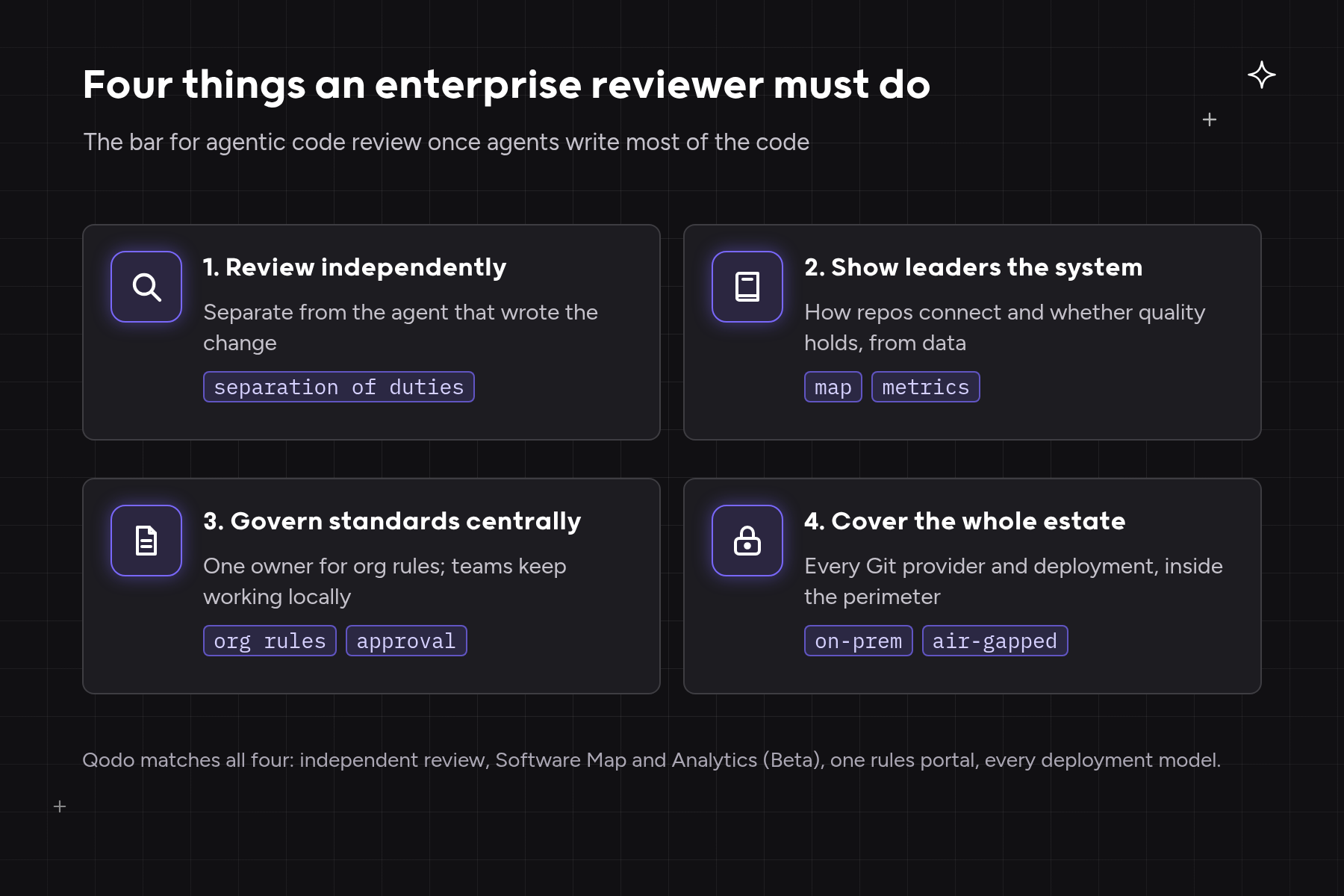
A great agentic code reviewer for an enterprise does four things. It reviews independently of the agent that wrote the change. It shows leaders how the system connects and whether quality is holding, from data rather than status meetings. It lets a platform team govern standards centrally while teams keep working locally. And it covers the whole estate: every Git provider, every deployment model, inside the security perimeter.
Our choice is Qodo, because it meets all four. It reviews code from any coding agent and belongs to none of them, so the review is never the writer grading its own work. Since Qodo 3.0, leaders get one live view of how services connect, where findings pile up and which agent work is waiting. Platform teams set standards once for every repository. And it covers GitHub, GitLab, Bitbucket and Azure DevOps, plus Gerrit on Enterprise, from SaaS to air-gapped on-prem.
We compared each vendor’s docs, pricing and security pages in October 2026.
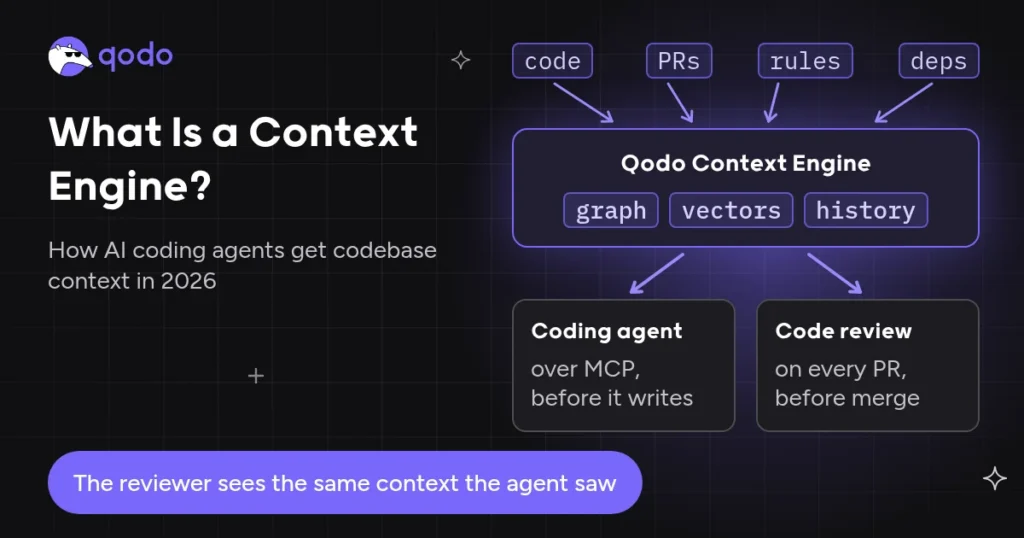
Qodo Academy’s code review chapter makes the same case: verification is its own discipline, separate from the generation tool.
Enterprise Code Review Tools at a Glance
The columns follow what an engineering leader asks first: who wrote the code, what can I see, and where does it run.
| Tool | Review approach | System view for leaders | Quality metrics | Git providers | Deployment |
| Qodo | Independent reviewer with organization-level governance views | Software Map (Beta) | Analytics (Beta), Findings page (Beta) | GitHub, GitLab, Bitbucket, Azure DevOps; Gerrit on Enterprise | Multi-tenant, single-tenant, on-prem, air-gapped (availability varies by feature) |
| Greptile | PR reviewer; repo-file settings override dashboard settings, and rules from both apply | None listed | Team analytics dashboard (Pro) | GitHub, GitLab, Bitbucket; Gitea on Enterprise; Perforce on self-hosted | Cloud; self-hosted on Enterprise |
| GitHub Copilot code review | Review inside the Copilot assistant that also writes the code | None listed | Copilot usage metrics | GitHub.com; Azure Repos (preview) | GitHub cloud; Azure Pipelines agents for Azure Repos (preview) |
| Claude Code Review | Managed review from Anthropic, whose Claude Code may have written the change | None listed | Analytics dashboard | GitHub, including Enterprise Server | Anthropic infrastructure |
What Changed for Enterprise Code Review in 2026
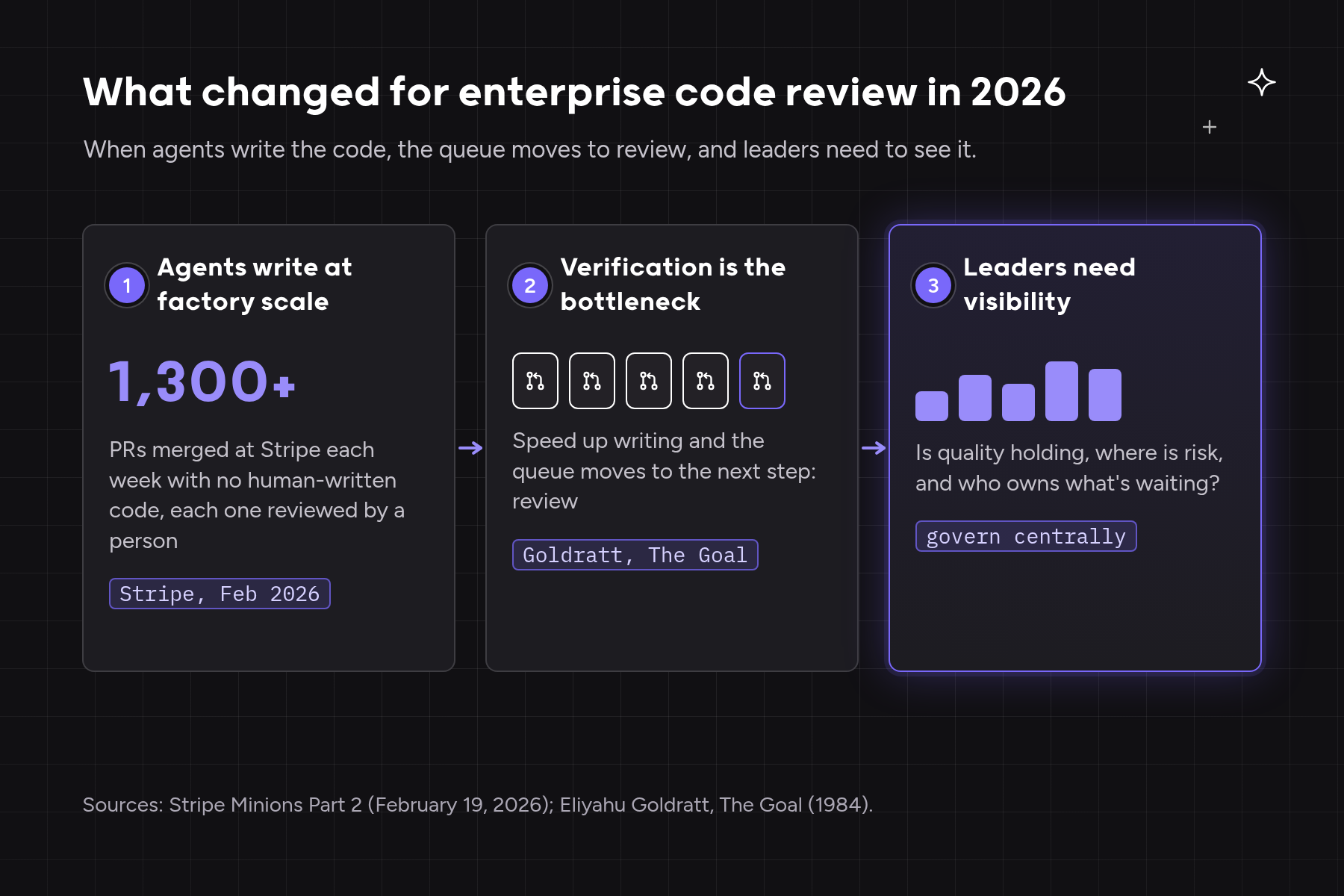
Agents already write code at factory scale
More than 1,300 pull requests merged at Stripe every week are written entirely by its Minions agents, each one reviewed by a person and none containing human-written code, per Stripe’s Minions post (February 19, 2026). An OpenAI team went further: in five months it shipped “a million lines of code” with “0 lines of manually-written code” (OpenAI, February 11, 2026).
Verification becomes the bottleneck
OpenAI put it plainly in its agent-first engineering post: “As code throughput increased, our bottleneck became human QA capacity.” Developers report the same shift. In a self-reported survey, the share saving 10 or more hours a week with AI fell from 68% to 26% in a year, and 65% spend time correcting AI-generated work that missed the original intent (October 20, 2026, Atlassian State of Developer Experience 2026). In 2026 the queue sits at review.
Most enterprises won’t run a dark factory soon
A few teams have stopped human review altogether. StrongDM’s AI team works by the rule “Code must not be reviewed by humans,” as Simon Willison’s writeup describes. That is a three-person team. Large organizations still put a person on every change, so they need review that scales, and work organized around the people who still approve it.
Leaders need to see it, and govern it centrally
OpenAI’s lesson for agent-written code is to “enforce boundaries centrally, allow autonomy locally.” Gil Elbaz, Chief AI Officer at Onyx Security, made the same case about governing AI agents in general on Qodo’s Agentic Review podcast:
“If you can’t see it, if it’s shadow AI, if it’s not known to the organization, it’s very hard to control and put the right guardrails in place.”
Gil Elbaz
Today only 39.3% of surveyed engineering leaders report visibility into AI-generated code-quality trends, according to Qodo’s 2026 survey. Censuswide surveyed 300 U.S. engineering leaders and 500 developers at organizations already using AI meaningfully in the SDLC, as separate samples, in August 2026; answers are self-reported. The seven checks below come straight from these four shifts.
How We Evaluated: Seven Enterprise Checks
We read each vendor’s documentation, pricing and security pages between October 20 and 22, 2026, and checked every tool against the same seven questions.
| # | Check | What we looked for in the docs |
| E1 | Separate from the tool that writes the code | Is the reviewer part of the same product or vendor as the coding agent? |
| E2 | A system view leaders can open | A browsable view of how repositories and services connect, and where findings concentrate |
| E3 | Quality numbers leaders can report | Findings, fixes and acceptance by repository, author and type, with drill-down and no manual reporting |
| E4 | In-flight agent work and ownership | One queue across repositories and providers, grouped by piece of work, with owners and wait time |
| E5 | Standards governed centrally, learned from the team | Who can change an organization standard, and do agents get the rules before they write? |
| E6 | The whole estate, inside the perimeter | Git providers including Azure DevOps and Gerrit; deployment per feature; self-hosted models; SSO; training on customer code |
| E7 | Clearing a finding, on the record | Dismissal with a reason that stays visible |
A note on approvals. None of the four merges code by itself. Qodo is advisory by default; its optional self-review approval on GitHub is off by default. Copilot code review can approve pull requests in public preview, off by default. Greptile has an auto-approve option, off by default. Claude Code Review never approves a pull request. Your branch protection decides whether any approval counts. Deterministic gates such as SonarQube still do a different job in CI.
The 4 Best Agentic Code Review Tools for Enterprise Teams
1. Qodo: Governance and Visibility Across the Whole Codebase
Review approach: Independent. Qodo reviews what Copilot, Cursor, Claude Code or Codex write, and sits outside all of them. That is the separation of duties enterprises already expect in finance and security, applied to code.
A map of the system (E2). The Software Map (Beta) is a live view of how repositories, services and contracts connect. It updates as PRs land. Its Monitor view shows where findings concentrate over today or the last 7, 30 or 90 days, and admins decide which roles can open it.
Numbers leaders can report (E3). Analytics (Beta) breaks findings and fix rates down by repository, PR author, severity, category and finding type, with drill-down to the PRs behind every number. It is built from review activity, so nobody compiles a report by hand. The Findings page (Beta) shows the share of critical findings resolved before merge.
One queue for agent work (E4). PR Triage (Research Preview) pulls open PRs from GitHub, GitLab, Bitbucket and Azure DevOps into one queue and shows related pull requests together as PR stacks. The queue ranks work by priority and shows blast radius, effort and time against SLA. On GitHub, reviewers assign themselves with Add me as reviewer, so ownership is visible to the whole team.
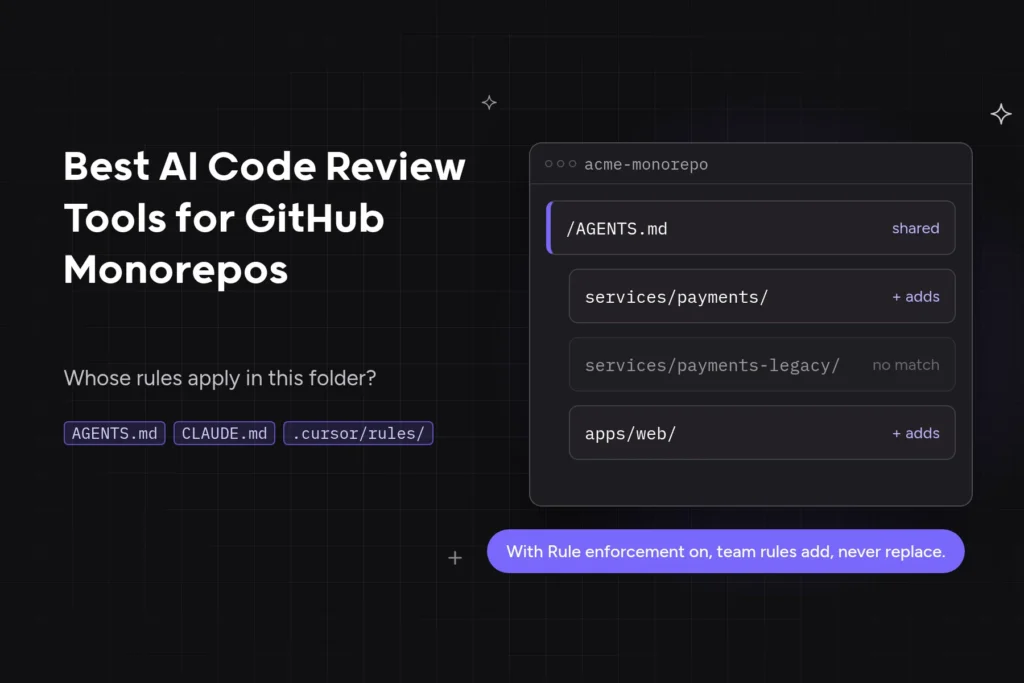
Standards the organization governs (E5). Once Rule enforcement is on, rules live in one portal. Admins choose whether rules mined from PR history (Rule Miner, Beta, on GitHub, GitLab and Azure DevOps in multi-tenant and single-tenant) activate automatically or wait for approval. Rules analytics (Beta) shows violations, including those merged anyway. Since version 3.1, rules whose findings are rarely fixed deactivate automatically unless locked. Through the Agentic Toolbox, the Get Rules skill (Research Preview) hands coding agents the applicable rules before they write a line.
The whole estate (E6). Qodo covers GitHub, GitLab, Bitbucket and Azure DevOps, plus Gerrit on Enterprise, in multi-tenant, single-tenant, on-prem and air-gapped deployments. On-prem includes the Context Engine and Agentic Toolbox, and reviews can run on self-hosted models such as NVIDIA Nemotron through your own model gateway. SSO and SAML are on Enterprise, and Qodo does not train models on your code. Availability varies by deployment model and Git provider; see docs.
A record of every decision (E7). Authors dismiss a finding with a reason, and it stays visible on the Findings page.
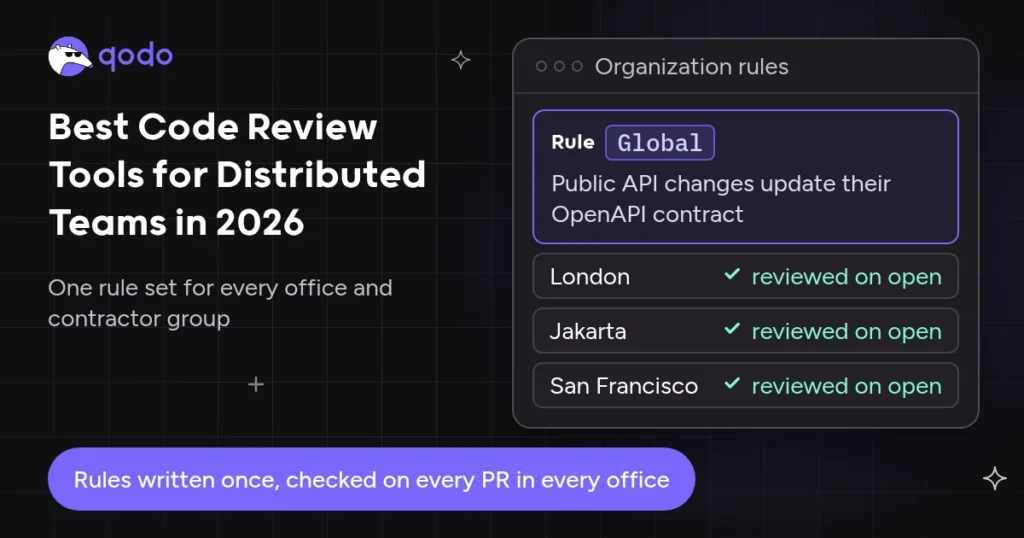
In production. LoopUp runs one platform across hundreds of repositories, with teams in London, San Francisco and Jakarta. It chose Qodo for context across the whole platform, configured it at the organization level, and now has Qodo review every pull request, as told in the LoopUp case study.
“It does about 90% of that initial review, and then it’s really just the final 10% where humans get involved.”
Chris Howard, CTO, LoopUp
Pricing as of October 2026: Pro Team costs $30 a month for 2,500 credits pooled across the team, for up to 30 users. Enterprise is custom.
Limits: Several leadership views are Beta or Research Preview, so record which ones your rollout depends on.
2. Greptile: Pull Request Review
Review approach: PR reviewer configured per repository. Standards live in repository config files: settings there override the dashboard, rules from both apply, and editing those files needs repository write access rather than a Greptile dashboard role.
Coverage: GitHub, GitLab and Bitbucket; Enterprise Server, Self-Managed, Data Center and Gitea on the Enterprise tier; Perforce on self-hosted Greptile. Azure DevOps and Gerrit aren’t in its code-provider list. Self-hosting is on Enterprise.
Data terms: Greptile may use de-identified customer data to train AI models unless an organization admin opts out.
Pricing as of October 2026: $1 per credit with no seat fees; Base, Plus and Apex reviews cost 1, 3 and 10 credits. Enterprise is custom.
Limits: Its docs describe no system map and no cross-repository queue of in-flight work.
3. GitHub Copilot Code Review: Review Inside the Assistant That Writes the Code
Review approach: Part of the Copilot assistant that also writes the code.
Coverage: GitHub.com, plus Azure Repos in public preview. No GitLab, Bitbucket, Gerrit or GitHub Enterprise Server.
Pricing as of October 2026: Reviews draw AI credits plus GitHub Actions minutes. By default a review bills to the requesting member’s own entitlement and fails when that quota runs out, unless owners switch billing to the organization.
Limits: The writer and the reviewer come from the same product.
4. Claude Code Review: Anthropic’s Managed Reviewer
Review approach: Managed review from Anthropic, whose Claude Code may have written the change.
Coverage: GitHub only, including Enterprise Server, running on Anthropic infrastructure. It isn’t available with Zero Data Retention, the HIPAA configuration or customer-managed encryption keys.
Pricing as of October 2026: Billed on token usage through usage credits, with no flat per-review price. Cost scales with change size and review level, the After every push trigger multiplies it by the number of pushes, and admins can set an organization-wide monthly spend limit.
Limits: One Git provider, and the writer and reviewer can come from the same vendor.
Qodo vs Greptile for Enterprise: The Evidence
Both review pull requests outside the coding agent. The difference is what leaders can see and who owns the standards.
| Enterprise need | Qodo | Greptile |
| System view leaders can open | Software Map (Beta) of repositories, services and contracts, with a Monitor view of where findings concentrate | Repo Clusters give the reviewer read-only context; no browsable system view described |
| In-flight agent work | PR Triage (Research Preview): one queue across Git providers, with related PRs grouped as PR stacks and reviewer assignment | No equivalent in docs or pricing |
| Who changes an org standard | One rules portal; admins approve or auto-activate mined rules | Repository files override dashboard settings, and rules from both apply; anyone with repository write access can edit them |
| Git providers | GitHub, GitLab, Bitbucket, Azure DevOps; Gerrit on Enterprise | GitHub, GitLab, Bitbucket; Gitea on Enterprise; Perforce on self-hosted |
| Training on your code | Qodo does not train models on your code | May use de-identified data unless an admin opts out |
What a VP Engineering Sees in Qodo
The board asks a VP Engineering, whose agents now open PRs across 600 repositories on GitHub, GitLab and Azure DevOps, three questions: is quality holding, where is risk concentrated, and what’s waiting for review? Here is where each answer lives in Qodo, following its documented views.
Step 1: Where findings concentrate. The Software Map Monitor view (Beta) shows which repositories carry the most findings over the last 90 days.
Step 2: Whether quality is holding. Qodo’s Analytics dashboard (Beta) shows findings and fix rates by repository over 90 days. The VP drills into one repository, then into the PRs behind the trend.
Step 3: What’s waiting, and who owns it. PR Triage (Research Preview) puts the agent’s open PRs in one queue, with related PRs grouped as a PR stack, their blast radius, effort and time against SLA, and the assigned reviewer.
Step 4: The same week, a contract changes. An agent edits a shared payments contract that a service on another Git provider consumes. Cross-repo review (Beta) reads the consumer and posts a Cross-repo finding on the PR, linked to the affected lines.
- amount_cents: integer
+ amount: { value: integer, currency: string }
HiBob shows what independent review looks like inside a real engineering process. Its 200+ developers build with Cursor and Claude, and as output grew, the bottleneck moved from writing code to reviewing it. HiBob made Qodo its governance layer and a mandatory reviewer: the PR author confirms they have addressed Qodo’s comments before a second human reviewer is assigned and the PR can merge, as the HiBob case study describes.
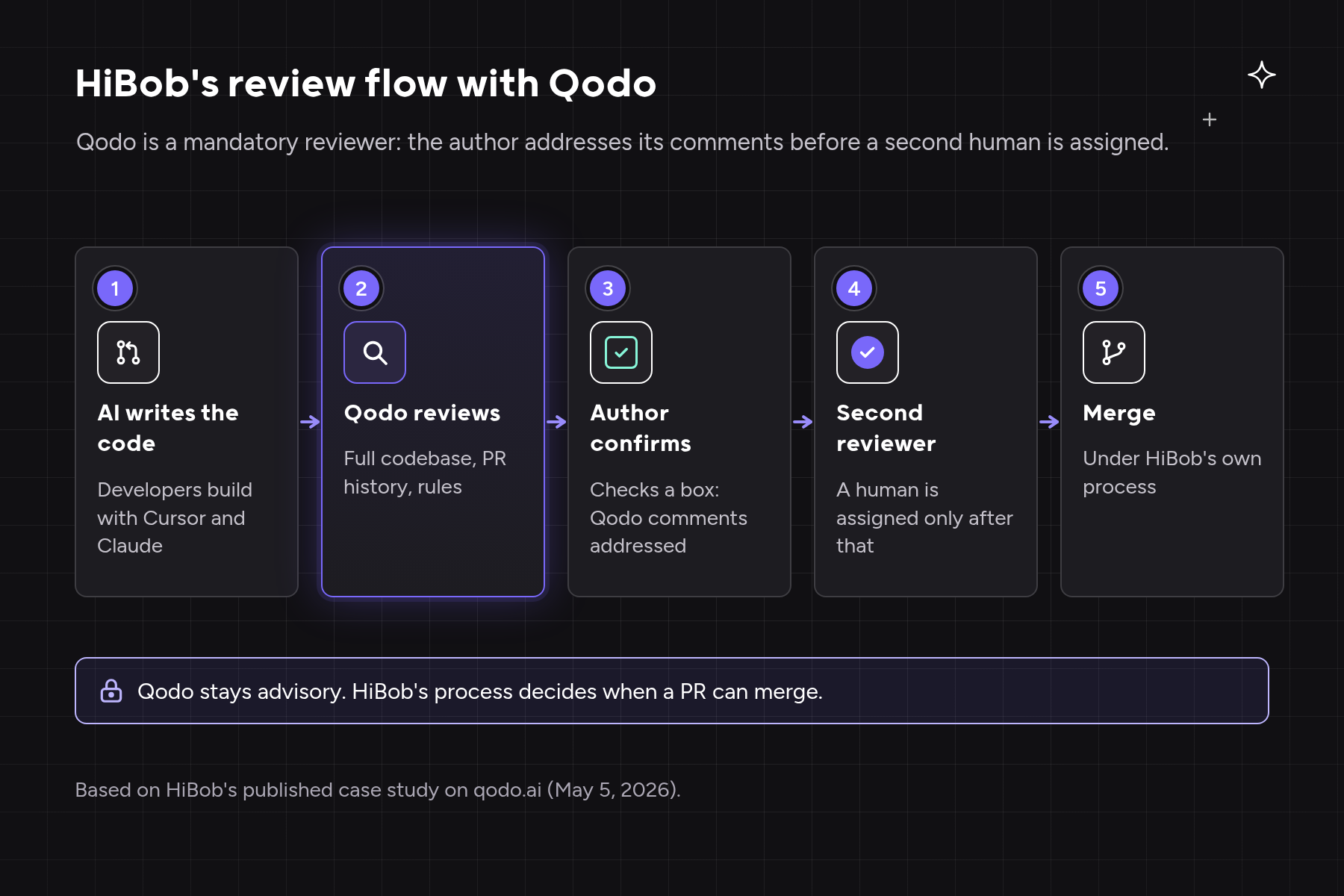
The turning point came after a bug in one of the app’s most-used flows stayed live for ten days while a fix waited on app store approval. Qodo had flagged the error on the original pull request.
“Being a reviewer, you’re not the person who wrote the code. It’s challenging to understand how a change affects other files or other flows. Qodo connects the dots in a way that for us would take a lot more time and a lot more focus.”
Ofer Morag Brin, Head of Mobile, HiBob
What to Look For in an Enterprise Agentic Code Reviewer
What to settle before procurement
- Attach the vendor’s dated availability-by-deployment page to the order form. A leadership view that runs only in multi-tenant SaaS doesn’t help a business unit that has to stay on-prem.
- Write status labels into the purchase. Piloting Beta or Research Preview features is fine; record which ones the rollout depends on.
- Agree the board metric before day one, and make it an outcome, such as critical findings resolved before merge, not a count of comments.
Warning signs in a governance demo
- A demo built only on the vendor’s sample repositories, not on one of yours.
- Quality that looks stable because people are doing extra manual review behind it.
A pilot plan for leaders
- Pick three business units, including the one with the heaviest agent use, for 30 days.
- Change one organization standard mid-pilot, then ask who approved it and where the change is recorded.
- At day 30, hand the leader view to someone outside the pilot. Can they answer the board’s three questions? Check that findings didn’t turn into a new queue nobody owns.
For phased rollouts across business units, Qodo Academy’s enterprise rollout walkthroughs cover rule ownership and pilot waves.
Conclusion: The Reviewer That Stays Outside the Code Writer
Copilot code review and Claude Code Review add review inside products your developers may already use to write code. Greptile reviews pull requests and lets each repository’s files carry its standards. Of the four, only Qodo gives leaders a map of the system and one queue of in-flight agent work, on top of review that sits outside every coding agent and runs across the whole estate. For an enterprise running agents at scale, that is the reviewer to choose.
FAQ: Agentic Code Review Tools for Enterprise Teams
Can an AI code reviewer be self-hosted, and does it train on our code?
An AI code reviewer can be self-hosted if the vendor ships on-prem or air-gapped deployments. Qodo runs multi-tenant, single-tenant, on-prem and air-gapped, including its Context Engine, with self-hosted models such as NVIDIA Nemotron through your own model gateway. Qodo does not train models on your code.
Can we keep our coding assistant’s built-in reviewer and add another one?
You can keep a coding assistant’s built-in reviewer and add an independent one. The built-in reviewer comes from the product that wrote the change. An independent reviewer such as Qodo checks every agent’s output against the same organization standards and reports it in one place.
Can an AI code reviewer approve a pull request or hold a merge?
An AI code reviewer can approve a pull request only if the tool supports it and your branch protection counts that approval. Qodo is advisory by default: authors fix or dismiss findings with a reason, and your branch protection and required reviewers decide what merges.
Ethical use of AI
We use AI to proofread and organise our ideas. The substance comes from our team of developers and technical experts: every fact is traced back to its original source, and every example is hand-crafted and tested.
About the author